Fishing charter availability in Costa Brava
Fishing charter availability search
Striker 44
Empuriabrava, Costa Brava
Drakkar
Ampuriabrava, Costa Brava
Wellcraft 232 Fisherman_BLANES
Blanes, Costa Brava
Scout 262 Sportfish_BLANES
Blanes, Costa Brava
Explore exciting deep sea fishing charters on the Costa Brava. Enjoy this unique deep sea experience, with a minimum of 200€ per charter. The ideal season for this technique is in summer, with depths up to 200 meters.
Explore the best fishing boats in Costa Brava based on user reviews. Choose from a selection of highly recommended boats for an exceptional offshore experience.
Find the most competitive prices for fishing trips in Costa Brava. Explore quality and economical options to enjoy deep sea fishing. Book now and live an unforgettable experience.
Spinfishing for Tuna
Portbou, Costa Brava
Big Game / Trolling
Portbou, Costa Brava
Family Fishing (ideal for kids)
Portbou, Costa Brava
Spinning-Slow Jigging
Portbou, Costa Brava
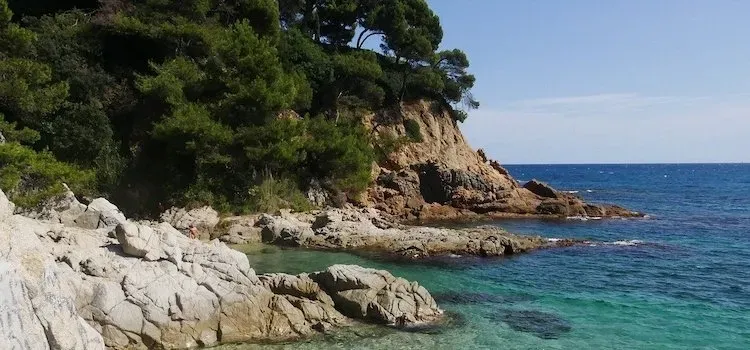
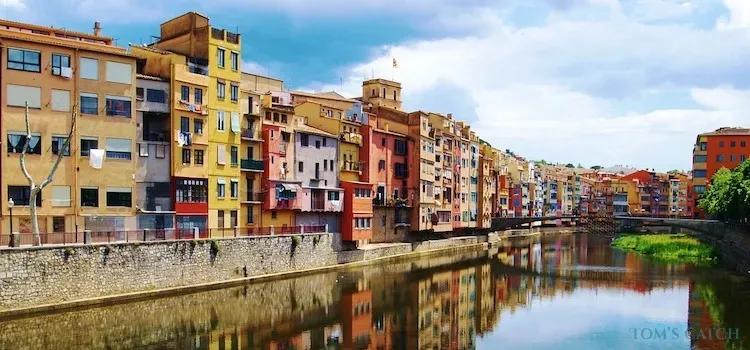
The Costa Brava lies between the French border and the mouth of the Tordera River, bordered by the Costa Vermella (in the north) and the Costa del Maresme (in the south). Nature plays an important role in this territory, which is home to the Natural Park of Cap de Creus, the Natural Park of Els Aiguamolls de l'Empordà and the Natural Park of El Montgrí, the Medes Islands and the Baix Ter. Three scenarios of enormous diversity; three places of great biological value. And the same goes for its coasts and the fauna that the sea harbors. Palafrugell and Cadaqués are two of the most famous towns, of great tourist attraction, without forgetting the bay of Roses, Banyoles or the botanical gardens of Santa Clotilde, Pinya de Rosa, Marimurtra and Cap Roig.
TOP SPECIES
1. Dentex: The common dentex (Dentex dentex) is a species of fish of the sparidae family and is named for its large teeth. It is also called rozon or sama, but it is mostly known as dentex dentex. It can reach a length of about 100 cm in its adult stage, weighing approximately 14 kg. The scales acquire a greenish-gray color if young or reddish with bluish spots in adults (sometimes with a dark transverse band). It has only one dorsal fin that can hide. But the most remarkable, as we have already said, are its teeth: it has four strong fangs with which it devours its prey (although it is not dangerous for humans). It basically feeds on fish, crabs, mollusks and, its favorite, squid.
We can find it between 0 and 200 meters deep, depending on whether it is young or adult we will find it in the first case closer to the shore and in the second case deeper. When fishing in Costa Brava, it is usually hunted with the bottom trolling technique with natural bait. As for the time of the year, it can be fished practically all year round, although spring is usually a very good time for fishing in Costa Brava for this species.
2. Amberjack: The Serinola Dumerili or also known by other names such as lemon fish, crowned amberjack, crown of law or milt, is a perciform fish of the Carangidae family. As for its physical characteristics, its body is long and flat with small eyes and a large and wide jaw. Its color is bluish on the back and whitish on the belly (although many have a yellowish tone). It has three fins, two dorsal and one anal, and can reach a length of 160 cm and weigh 60 kg. This fish can be fished all year round and goes very well with natural bait such as mackerel, squid or live cuttlefish. The Amberjack is one of the most desired catches for jigging lovers and it is usually fished with large long jigs near rocks and wrecks found at considerable depths.
3. Bluefin Tuna: The Bluefin Tuna (Thunnus Thynnus) or also known as bluefin tuna, is a fish of the Scombridae family. It is a species that can weigh up to 450 kilograms, which makes it one of the most prized species by fishermen when fishing in Costa Brava. It can be fished with the trolling technique from April to August, although it can also be fished in July and August. It can be found offshore.
In recent years there has been an increase of Bluefin Tuna with weights between 20kg and 50kg. These spectacular predators are getting closer and closer to the coasts of the Costa Brava, which is great news for spinning fans and more specifically for heavy spinning. It is best to use walkers, stickbait and fairly large jigs that are retrieved irregularly, sometimes with dry jerks, stops, quick retrieves, etc. It is advisable to use a good reel (such as Saltiga 4500 or 6500 from Daiwa or Stella 18000 - 20000 from Shimano, for example), 60lb - 80lb braided lines because the fight with a bluefin tuna can easily go on for more than an hour.
4. Red Bream: The common Red Bream is also known as Red Bream, Bogarrabella or Bogazo. Also pancho or panchito (when young). Its shape is oval and its sides are flattened. The head has a rounded shape and a reddish back, and silver sides. Its fins are pink and it has black spots in the axils of its pectoral fins. It can weigh more than 6 kilos and can measure between 25 and 60 cm. Sea bream are fished in deep water (200 - 400m deep). Juveniles are more coastal, shallow water and swim in large schools. They live in small schools of fish and as their age increases, they are found in deeper and sandier places. Fishing in Costa Brava in winter is usually very interesting for bottom fishing.
5. leerfish: The leerfish is a fish of the family Carangidae of the order Perciformes. It has a dorsal fin with a wide base. Its body is flat and elongated and has a relatively small head compared to the body. The jaw is provided with small teeth. It is a fast predatory fish. The leerfish basically feeds on fish such as sardines or anchovies, alachas, marlin or mullets. Horse mackerel, jacks, bogas, castanets and mackerel, as well as cephalopods that it hunts on the edge of the rocks and sand are also part of its diet. It can gobble in one bite. When fishing in Costa Brava, the leerfish can be fished using the trolling technique with espets or needles between 7 and 15 meters deep.
Spring: Fishing in Costa Brava in spring, summer and autumn is very popular for inshore trolling. From April, May onwards you can start trolling and jigging to fish for species such as Bluefin Tuna, Albacore and Yellowfin Tuna. Spring is also a good time to fish with espets or needles to catch leerfish or bluefish in 7m - 15m depth.
Summer: Fishing in Costa Brava in summer is a good time to fish for Bluefin Tuna in brumeo. This fishing can be done offshore in the area of Cap de Creus, Blanes or Palamos. Closer to the coast you can do bottom trolling with natural bait (Squid, Mackerel or Horse Mackerel) for fishing in Costa Brava in Dentex or Amberjack.
Autumn: Fishing in Costa Brava in autumn is an excellent time to troll inshore with small lures and sinkers to fish for Bonito, Mackerel, Melva, Bacoreta, Dolphinfish (among others). It is also a good time to fish with spinners or needles to catch leerfish or bluefish in 7m - 15m depth. September and October are very good months for light trolling. Bonitos and Dolphinfish are fished in 40 - 80 meters deep waters, with Plumas, Rapala, Yozuri, Halco, and other small lures. It is also worth to fish them with light tackle as they usually offer a good fight.
Winter: The fishing in Costa Brava in winter is ideal for deep and bottom fishing. In the deep sea we can find big bream, forkbeard, conger eel, Cherna, grouper or hake (among others). During the winter months fishing in Costa Brava is often practiced bottom fishing. Wrecks and rocks are the hot spots for bottom fishing in Costa Brava and fishermen will not easily reveal where to find them. With this technique you can fish for pagel, snapper, serrano, bream, grunt, forkbeard, forkbeard, conger eel among others. Sardine, squid, octopus, "Morralet", etc. are used as bait.
All year round: Bottom fishing in Costa Brava can be done at any time of the year, although we have already said that it is usually done in winter.
The term "Costa Brava" was first published by Ferrán Agulló in 1908, referring to the rocky and abrupt coastline that makes it up. Since then, this seafaring slang became popular. From 1930 onwards, tourists filled the beaches of the area and mingled with fishermen and farmers who farmed near the coast. Between the 50's and 60's, tourism grew and there was a great urban development of some localities of these regions. Nowadays, both tourists attracted by its beauty and fishermen attracted by the varied and very active fishing in Costa Brava coexist.
For sport fishing you need a fishing license that can be obtained from the website of the Generalitat de Catalunya:
>> Obtain a recreational surface fishing license
Remember that fishing charters usually already have a collective fishing license so you don't need to buy one if you are going to charter a boat.
| Average capacity: 5 people |
| Popular fishing techniques: Jigging, Bottom Fishing, Tuna fishing |
| Average price: 159.5498616968 per day |
| Low season price:: US$520 per day |
| High season price: US$1735 per day |
| Includes: Fishing tackle, Fishing License, Bait & lures |
Receive exclusive offers, inspiring stories, and updates on fishing regulations.
Subscribe and receive tips and news for your next fishing trip.
“Crecí un 20% mis reservas con Tom’s Catch”
Oscar Santos,
Captain from Luna in Puerto Banús, Marbella (Spain).
Oscar Santos,
Captain from Luna in Puerto Banús, Marbella (Spain).